

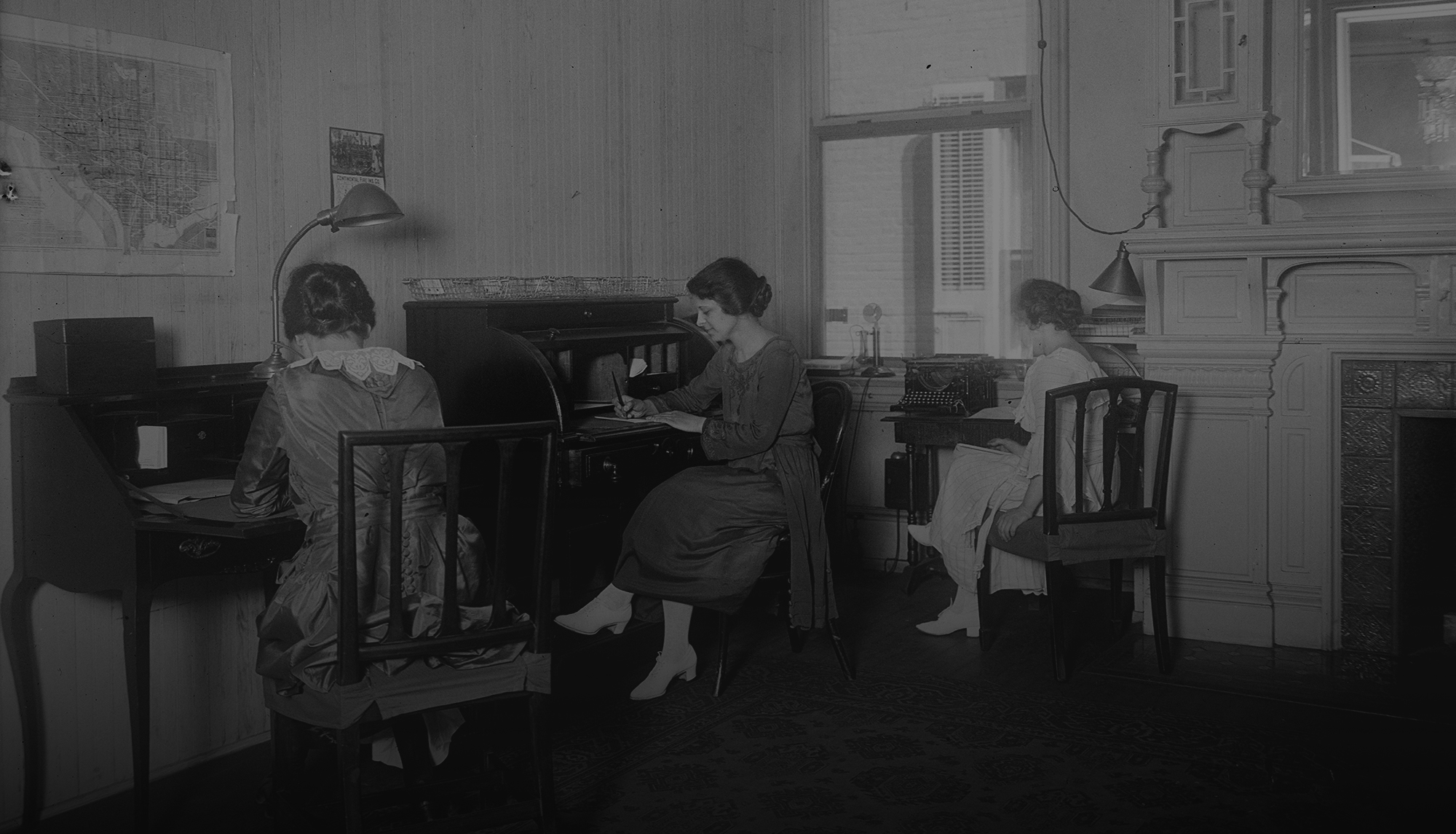
As we celebrate the centennial of the 19th Amendment, giving women the right to vote, we should also celebrate the major strides women have made in the labor market. Their entry into paid work has been a major factor in America’s prosperity over the past century and a quarter.
and there are further opportunities in this direction. Economic models also suggest
that while it can be difficult for any one employer to move to a model with shorter
hours, if many firms were to change their model, they and their workers could all
be better off.
Of course, most women are not employed in fields that require such long hours or that impose such severe penalties for taking time off. But the difficulty of balancing work and family is a widespread problem. In fact, the recent trend in many occupations is to demand complete scheduling flexibility, which can result in too few hours of work for those with family demands and can make it difficult to schedule childcare. Reforms that encourage companies to provide some predictability in schedules, cross-train workers to perform different tasks, or require a minimum guaranteed number of hours in exchange for flexibility could improve the lives of workers holding such jobs. Another problem is that in most states, childcare is affordable for fewer than half of all families. And just 5 percent of workers with wages in the bottom quarter of the wage distribution have jobs that provide them with paid family leave. This circumstance puts many women in the position of having to choose between caring for a sick family member and keeping their jobs.
This possibility should inform our own thinking about policies to make it easier for women and men to combine their family and career aspirations. For instance, improving access to affordable and good quality childcare would appear to fit the bill, as it has been shown to support full-time employment. Recently, there also seems to be some momentum for providing families with paid leave at the time of childbirth. The experience in Europe suggests picking policies that do not narrowly target childbirth, but instead can be used to meet a variety of health and caregiving responsibilities.
Conclusion
The United States faces a number of longer-term economic challenges, including the aging of the population and the low growth rate of productivity. One recent study estimates that increasing the female participation rate to that of men would raise our gross domestic product by 5 percent. Our workplaces and families, as well as women themselves, would benefit from continued progress. However, a number of factors appear to be holding women back, including the difficulty women currently have in trying to combine their careers with other aspects of their lives, including caregiving. In looking to solutions, we should consider improvements to work environments and policies that benefit not only women, but all workers. Pursuing such a strategy would be in keeping with the story of the rise in women’s involvement in the workforce, which has contributed not only to their own well-being but more broadly to the welfare and prosperity of our country.
This essay is a revised version of a speech that Janet Yellen, then chair of the Federal Reserve, delivered on May 5, 2017 at the “125 Years of Women at Brown Conference,” sponsored by Brown University in Providence, Rhode Island. Yellen would like to thank Stephanie Aaronson, now vice president and director of Economic Studies at the Brookings Institution, for her assistance in the preparation of the original remarks.
<img src=” http: alt=”Janet L. Yellen”>
Janet L. Yellen
Distinguished Fellow in Residence – Economic Studies, The Hutchins Center on Fiscal and Monetary Policy
Janet L. Yellen is a Distinguished Fellow in Residence with the Economic Studies Program at the Brookings Institution, as well as an adviser to the Magellan Group. Dr. Yellen previously served as Chair of the Federal Reserve Board (2014-2018), as Vice Chair of the Federal Reserve Board (2010-2014), as President and Chief Executive Officer of the Federal Reserve Bank of San Francisco (2004-2010), and as Chair of the White House Council of Economic Advisors (1997-1999). In 2012, Dr. Yellen was appointed Distinguished Fellow of the American Economic Association, for which she served as a Vice President (2004-2005), and where she is currently President of the Executive Committee.
