

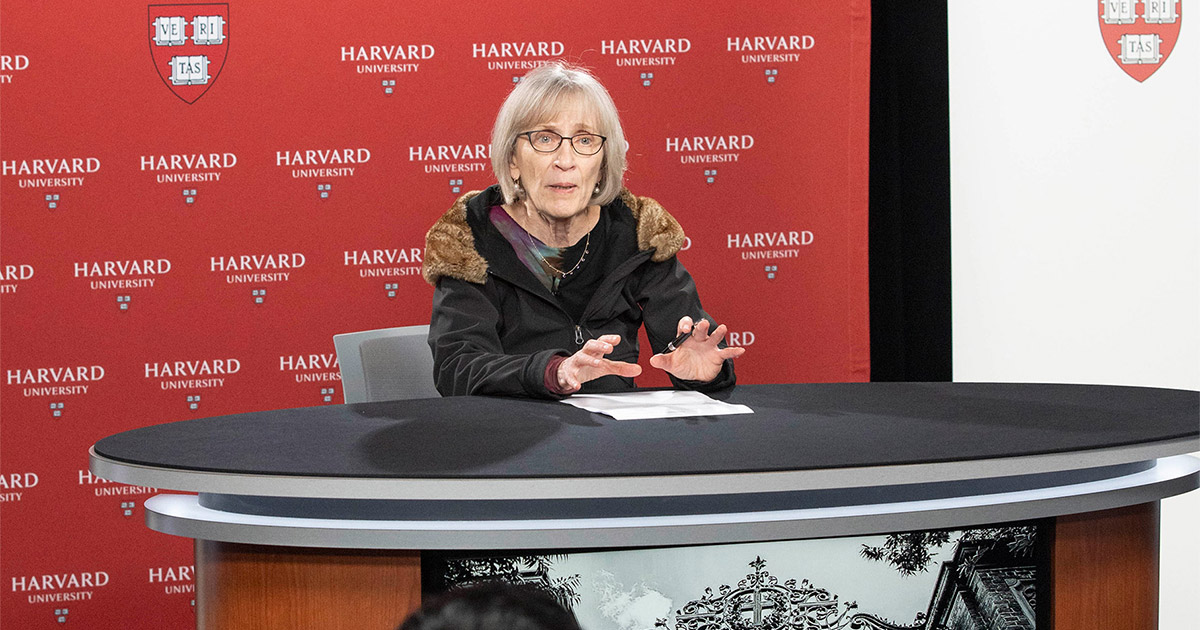
Excerpted from “Career and Family: Women’s Century-long Journey Toward Equity” (2021) by Claudia Goldin,Henry Lee Professor of Economics and winner of the 2023 Nobel Memorial Prize in Economic Sciences.
Now, more than ever, couples of all stripes are struggling to balance employment and family, their work lives and home lives. As a nation, we are collectively waking up to the importance of caregiving, to its value, for the present and for future generations. We are starting to fully realize its cost in terms of lost income, flattened careers, and trade-offs between couples (heterosexual and same sex), as well as the particularly strenuous demands on single mothers and fathers. These realizations predated the pandemic but have been brought into sharp focus by it.
In 1963, Betty Friedan wrote about college-educated women who were frustrated as stay-at-home moms, noting that their problem “has no name.” Almost 60 years later, female college graduates are largely on career tracks, but their national headlines (and book jackets). Do they need more drive? Do they need to lean in? Why aren’t women able to advance up the corporate ladder at the speed of their male counterparts? Why aren’t they compensated at the level their experience and seniority deserve?
Private doubts haunt many women, doubts that are shared in their intimate partnerships or relegated to private discussions with close friends. Should you date someone whose career is just as time consuming as your own? Should you put off having a family, even if you’re sure you want one? Should you freeze your eggs if you aren’t partnered by 35? Are you willing to walk away from an ambitious career (maybe one you’ve been building toward ever since you took your SAT) to raise kids? If you aren’t, who will pack the lunches, pick up your child from swim practice, and answer the panic-inducing call from the school nurse?
All these factors are real. But are they the root of the problem? Do they add up to the major difference between men and women in their salaries and careers? If they were all miraculously fixed, would the world of women and men, the world of couples and young parents, look completely different? Are they collectively the “new problem with no name”?
Some attribute the gender earnings gap to “occupational segregation” — the idea that women and men are self-selecting, or being railroaded into, certain professions that are stereotypically gendered (such as nurse versus doctor, teacher versus professor), and that those chosen professions pay differently.
Although lively public and private discourse has brought these important issues to light, we’re often guilty of disregarding the enormous scale and long history of gender disparities. A single company slapped on the wrist, one more woman who makes it to the boardroom, a few progressive tech leaders who go on paternity leave — such solutions are the economic equivalent of tossing a box of Band-Aids to someone with bubonic plague.
These responses haven’t worked to erase the differences in the gender pay gap. And they will never provide a complete solution to gender inequality, because they treat only the symptoms. They will never enable women to achieve both career and family to the same degree as men. If we want to eradicate or even narrow the pay gap, we must first plunge deeper toward the root of these setbacks and give the problem a more accurate name: greedy work.
For much of the 20th century, discrimination against women was a major bar to their ability to have a career. Historical documents from the 1930s to the 1950s reveal easily spotted smoking guns — actual evidence of prejudice and discrimination in employment and earnings. In the late 1930s, firm managers told survey agents, “Loan work is not suitable for girls,” “People with these jobs [automobile sales] are in contact with the public … women wouldn’t be acceptable.” That was at the end of the Great Depression. But even during the tight labor market of the late 1950s, company representatives categorically stated, “Mothers of young children are not hired,” “Married women with … infants are not encouraged to return to work,” and “Pregnancy is cause for a voluntary resignation [although] the company is glad to have the women return when the children are, perhaps, in junior high school.”
Today, we don’t see such explicit smoking guns. Data now show that true pay and employment discrimination, while they matter, are relatively small. This does not mean that many women don’t face discrimination and bias, or that sexual harassment and assault do not exist in the workplace. We have not seen a nationwide #MeToo movement for nothing.
So why do earnings differences persist when gender equality at work seems to finally be within our grasp, and at a time when more professions are open to women than ever before? Are women Campus & Community 8 min read Campus & Community 8 min read‘Those inequalities are inequalities that occur within households’

This woman’s work
