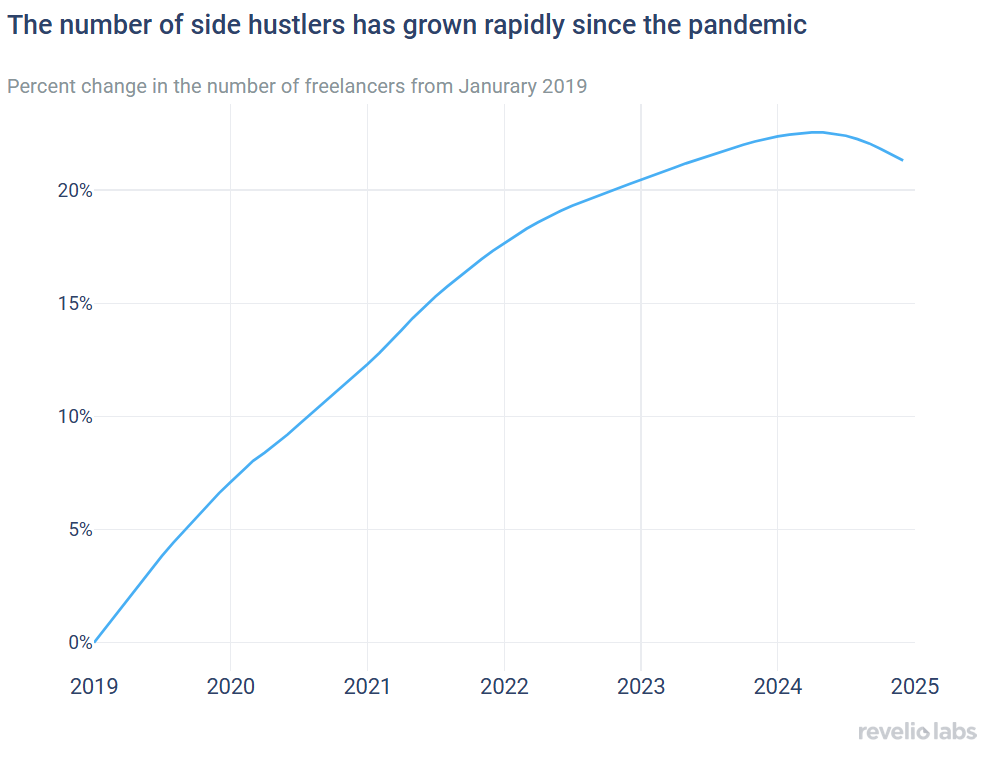
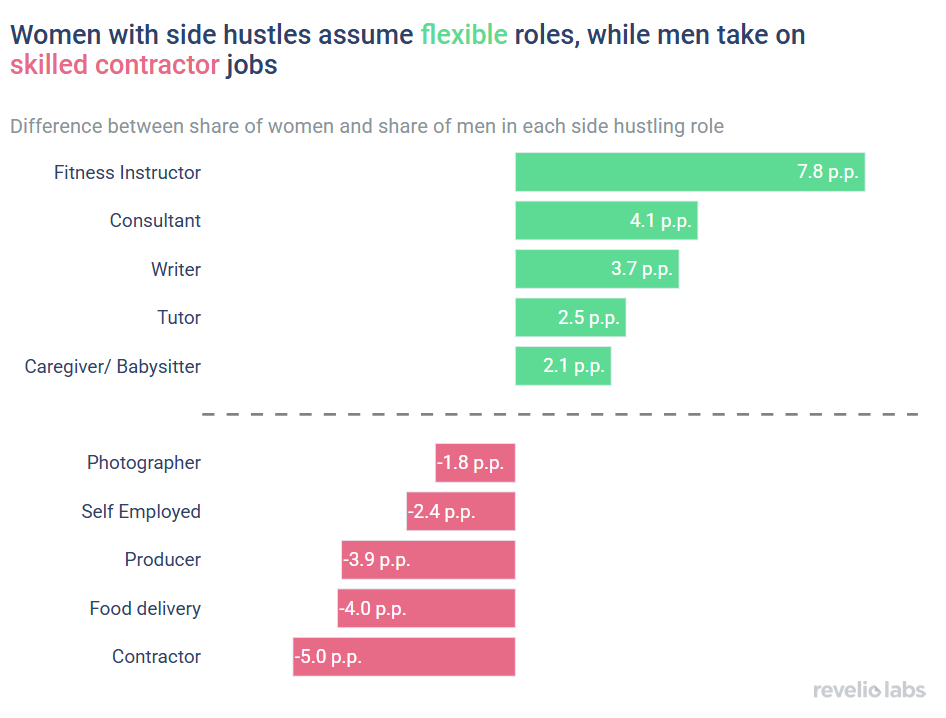
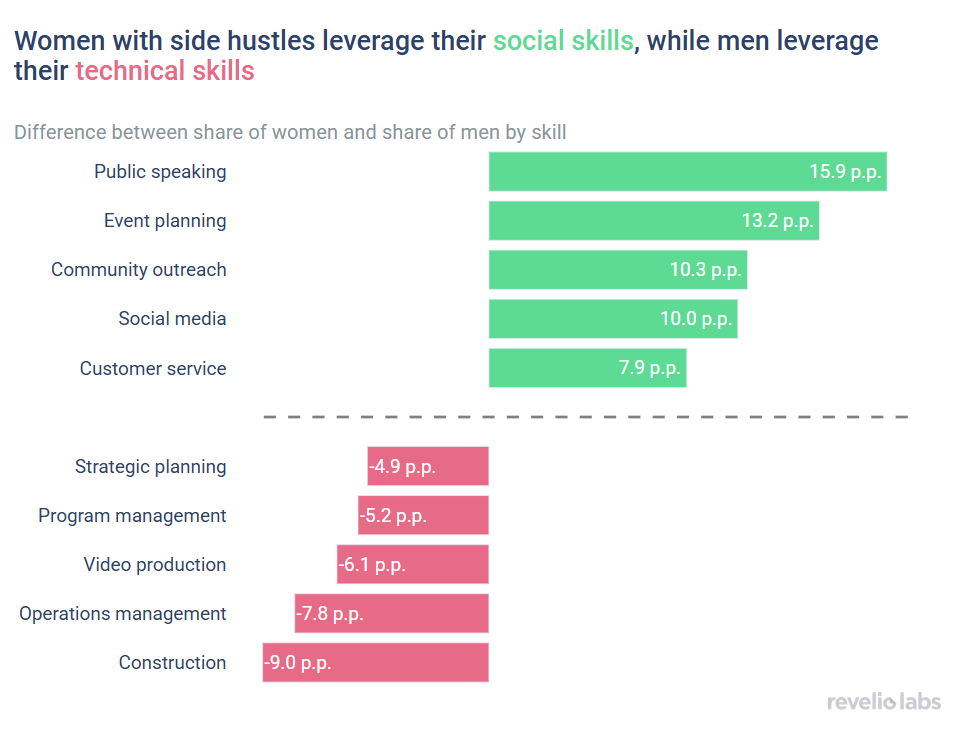
In a rapidly changing labor market, side hustle among American workers. The prevalence of side hustle freelancers has grown by 20% relative to the level in 2019.
Figure 1. fig1 Source: Revelio Labs, February 2025
In this analysis workers with side hustle are defined as individuals who hold two overlapping positions—one of which is a freelancing role or a job through platforms like Uber, Lyft, Instacart, and others. Identifying workers with side hustles relies on them reporting their side hustle on their online professional profiles. As a result, the number of side hustlers that we capture may not reflect the full extent of side hustling, as some individuals may choose not to record their second jobs. Nevertheless, our analysis captures a broad spectrum of side hustle activities, providing insights into the different ways people are supplementing their income or pursuing entrepreneurial ventures outside of traditional full-time employment.
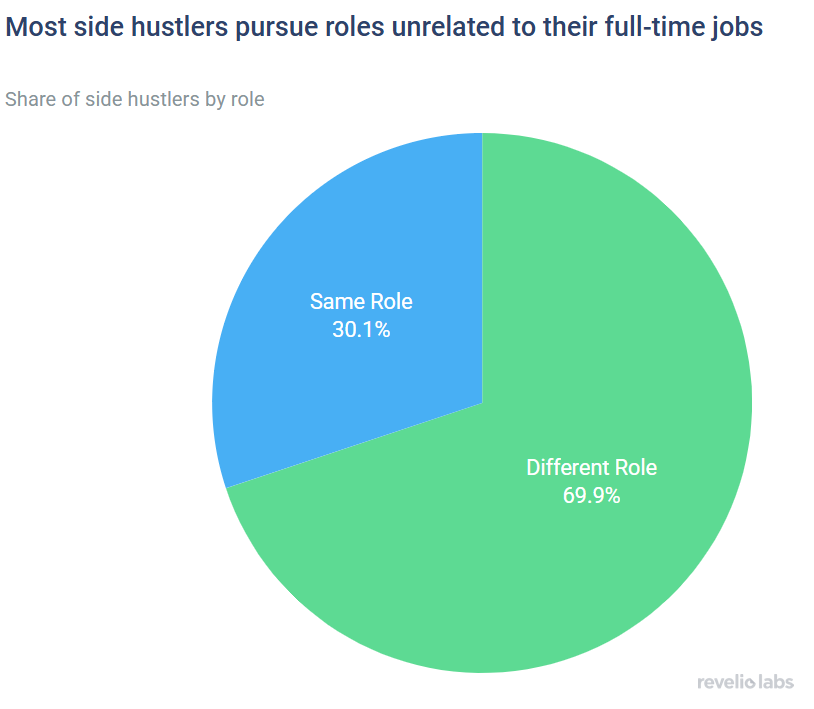
Most side hustlers choose gigs that are not closely related to their main occupation. In fact, only 30% of side hustlers take on a role that is aligned with their primary job. This trend reveals that individuals often leverage their skills and interests to explore entirely different fields or industries. This not only allows for additional income but also opens doors to new experiences and career growth outside their primary profession.
Figure 2. fig2 Source: Revelio Labs, February 2025
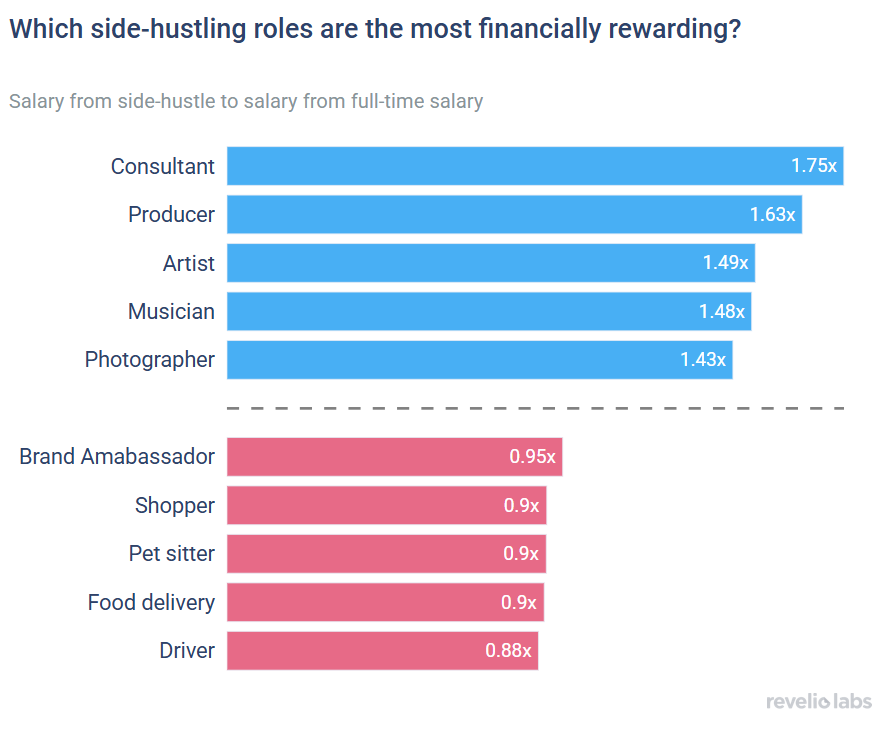
Not all side hustles are created equal: Some roles offer remarkably lucrative opportunities, while others fall short. In some cases, side hustles can even outpay full-time jobs, regardless of the main job. For instance, in consulting roles, earnings from side hustles can amount to as much as 1.7 times the pay that workers get from their main full-time job. In contrast, roles like driving and food delivery only pay 88% of what workers can earn in their full time role. This disparity highlights how certain skill sets enable individuals to monetize their expertise outside traditional employment. Regardless of one’s full-time role or whether it aligns with their side hustle, the fact that some side gigs surpass full-time earnings is reshaping perceptions of what a “side job” can achieve.
Figure 3. fig3 Source: Revelio Labs, February 2025
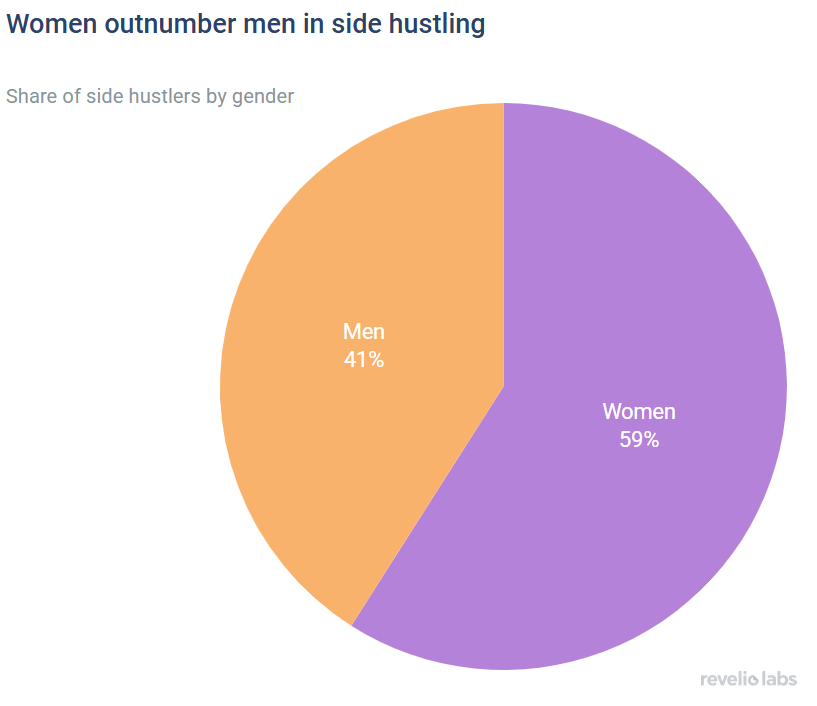
When it comes to the gender composition of side hustlers, women take the lead. Among U.S. workers who currently have a side hustle, 59% are women. Whether motivated by financial necessity, the desire to explore new opportunities, or simply pursuing hobbies and interests, women are more likely to pursue entrepreneurial ventures, highlighting the potential of side hustling as a powerful pathway to economic empowerment. Despite women leading in the number of side hustlers, the difference in income from side hustling between genders is relatively small. Men earn an average of $34.10 per hour from their side hustles, while women earn $32.30 per hour. This narrow gap suggests that side hustling offers a more equitable earning potential compared to traditional full-time employment, where wage disparities between men and women are often more pronounced.
Figure 4. fig4 Source: Revelio Labs, February 2025
When examining the age distribution of side hustlers, a clear generational pattern emerges for both men and women. For men, a larger share of side hustlers are over 40 years old—belonging to the Baby Boomer and Gen X generations. This could be due to factors like supplementing Figure 5. fig5 Source: Revelio Labs, February 2025