

Mortgage rates have been creeping higher since Monday, but it hasn’t been a dramatic shift. For now, rates appear to be heading back to roughly where they were last week, before a flurry of anxiety over AI profits prompted investors to pile into the bond market. Making matters worse, rates aren’t rising because concerns about tech are going away — the potential for renewed hostilities in Iran looks to be driving the latest uptick.
The average interest rate on a 30-year, fixed-rate mortgage rose to 7.28% APR, according to rates provided to NerdWallet by Zillow. This is four basis points higher than yesterday but seven basis points lower than a week ago. (See our chart below for more specifics.) A basis point is one one-hundredth of a percentage point.
If everything you just read makes sense, you’re good to go. But if you’re like “Wait a minute, what does AI have to do with this?” or wondering how bonds relate to mortgage rates, keep reading below the chart.
Average mortgage rates, last 30 days
» Take the next step:Compare mortgage rates from NerdWallet’s top lenders
🤓 Kate on Rates, 10/22/26
📈 What influences mortgage rates?
Mortgage rates are constantly changing, since a major part of how rates are set depends on reactions to new inflation reports, job numbers, Fed meetings, global news … you name it. For example, even tiny changes in the bond market can shift mortgage pricing.
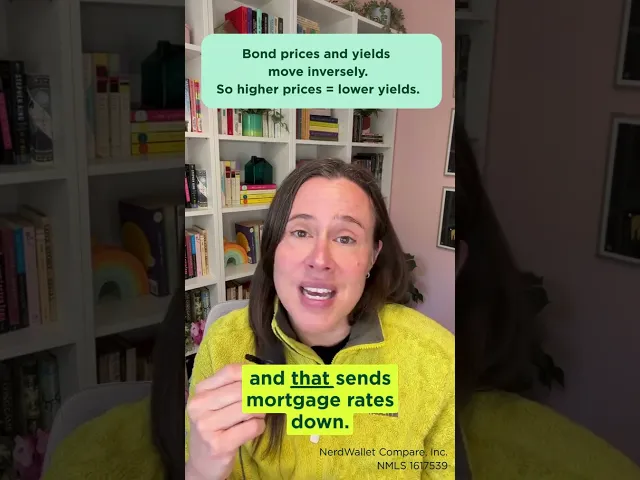
Here’s what’s been happening lately. Mortgage rates had been edging lower as Treasury yields came down. Mortgage rates are generally benchmarked to the yield on 10-year Treasury notes, so where the yield goes, rates go, too.
The yield is basically the return investors get on a bond. A bond is a little piece of government or corporate debt; when an investor buys a bond, they’re making a tiny loan to the issuer. The issuer agrees to pay them back a set amount over the bond’s lifespan (that’s the yield), and when the bond matures, the investor gets the bond’s original price back. That’s why unlike anything-could-happen stocks, bonds are generally considered relatively low risk.
A bond investor who buys a bond at issuance knows immediately: Here’s my cost, here’s what I’ll earn and here’s when my initial investment will be returned. When investors sell bonds to each other, things get more interesting, because the market now determines the price, and that shifts the relative value of the yield.
Here’s how that works. If you bought a $100 bond with $5 annual yield payments, that yield is 5%. But say you want to sell that bond but can’t find a full-price buyer; the best price you can get for it is $80. The annual yield payments are still $5, but since they’re relative to that lower price, the yield is now 6.25%.
For much of the summer and early fall, we saw lots of Treasury bond selling, which drove prices down and yields up. That kept pushing mortgage rates higher. Additionally, tech <a s Consumer Price Index, which came out last Wednesday, and Producer Price Index, from Thursday, showed that inflation's still running hot. If prices are climbing, the costs of building <a re seeing yields — and thus, mortgage rates — move a little bit higher now, but unfortunately it's not because tech is looking strong. Credible reports that the U.S. is likely to resume strikes in Iran after the midterm elections are bringing markets back to another familiar narrative.
When hostilities reignite in the Middle East, so do inflation fears. Inflation’s bad for bonds (yields don’t go as far when money’s not worth as much), so even rumored fighting in Iran tends to drive bond prices lower, which of course pushes yields higher. And that’s putting upward pressure on mortgage rates.
» Learn more:How the Fed affects mortgage rates
Explore mortgages today and get started on your homeownership goals
Get personalized rates. Your lender matches are just a few questions away.Won’t affect your credit score
🔁 Should I refinance?
Refinancing might make sense if today’s rates are at least 0.5 to 0.75 of a percentage point lower than your current rate (and if you plan to stay in your home long enough to break even on closing costs).
With rates where they are right now, you could start considering a refi if your current rate is around 7.78% or higher — but there just aren’t too many people for whom that’s true.
Also consider your goals: Are you trying to lower your monthly payment, shorten your loan term or turn home equity into cash? For example, you might be more comfortable with paying a higher rate for a cash-out refinancethan you would for a rate-and-term refinance, so long as the overall costs are lower than if you kept your original mortgage and added a HELOC or home equity loan.
If you’re looking for a lower rate, use NerdWallet’s refinance calculator to estimate savings and understand how long it would take to break even on the costs of refinancing.
» Time to refi?Compare refinance rates from NerdWallet’s top lenders
🏡 Should I start <a s mortgage news hub for all our latest coverage.🧐 Why is the rate I saw online different from the quote I got?
The rate you see advertised is a sample rate — usually for a borrower with perfect credit, making a big down payment, and paying for mortgage points. That won’t match every buyer’s circumstances.
In addition to market factors outside of your control, your customized quote depends on your:
Even two people with similar credit scores might get different rates, depending on their overall financial profiles.
» Get the best rate for you:How to get the best mortgage rate
👀 If I apply now, can I get the rate I saw today?
Maybe — but even personalized rate quotes can change until you lock. That’s because lenders adjust pricing multiple times a day in response to market changes.
» Doing your research?Compare NerdWallet’s best mortgage lenders
Explore more on
How to Move in 2026Mortgages
Back to top
