Launching andbuilding a brand around homemade soap or bath bombs is an excellent opportunity. These handmade items are consistently in demand and can be created with relatively simple ingredients.
The economics are attractive: material costs run about $1–$2 per bar of soap, while finished bars sell for $6–$10 each or $20–$30 per gift set. That gives you a healthy margin even when you factor in packaging.
Just keep in mind that soap production does require some specific equipment and safety gear, like a digital scale for precise measurements and goggles for handling lye, so budget around $50–$100 for your initial setup.
14. Body scrubs If you plan to make soap, consider adding body scrubs to your product lineup. Buyers want natural, skin-friendly ingredients they can actually recognize, which is hard to find in most store-bought options.
A basic sugar or salt scrub costs about $1–$3 per jar in ingredients and sells for $10–$18.
The real business advantage here is bundling. Packaging body scrubs with your soaps or bath bombs into gift sets can push your average order value from $10 to $30+ with minimal extra effort.
15. Personalized and engraved gifts People love items that feel custom-made for them, and they’re willing to pay a premium for it. A plain wooden cutting board might sell for $15, but add a name or wedding date and it becomes a $35–$50 product.
You can personalize almost anything: glassware, jewelry, wooden items, leather goods, or even tech accessories.
A Cricut machine (starting around $200) or an entry-level laser engraver ($300–$500) pays for itself quickly when you’re adding $10–$20 in value per item.
Made-to-order items also have a built-in advantage: since you produce them after the sale, there’s no unsold inventory sitting around.
16. Lip balm Lip balm is a universal personal care product that’s easy to produce at home and works as a low-risk starter product. A batch of 20–30 lip balms costs about $10–$15 in ingredients (beeswax, coconut oil, shea butter, essential oils), and individual tubes sell for $3–$5 each.
Where lip balm really shines is as an add-on product. If you’re already selling soap, body scrubs, or other personal care items, adding lip balm to your shop gives customers another reason to increase their order size.
17. Perfume
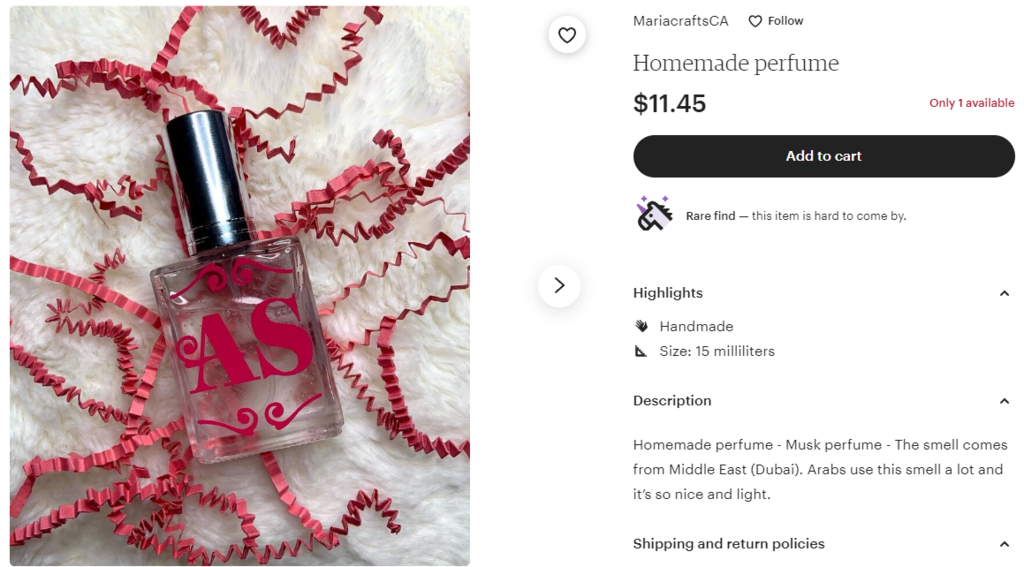
Perfume is a product where branding and presentation matter as much as the scent itself. The good news is that it’s easier to make a DIY perfume at home than most people think.
Natural ingredients like essential oils and flowers are all you need to get started, and a small batch costs relatively little to produce.
The profit margins depend heavily on packaging. A simple roll-on perfume in a basic bottle might sell for $12–$15, but the same scent in a beautifully designed bottle with premium labeling can command $30–$50.
18. Pillowcases Pillowcases are a popular home decor item that lets you get creative with embroidery, stitching, and fabric choices. The smart play here is selling them as part of a coordinated collection rather than individually.
A matching set of two or four feels more like a “home decor upgrade” and can sell for $25–$50, and seasonal designs (holiday patterns, spring florals, fall tones) drive repeat purchases from the same customers.
19. Pottery and ceramics Pottery has seen a huge surge in popularity, both as a hobby and as a product to sell. Handmade mugs, planters, vases, bowls, and decorative pieces all have strong demand, and buyers are willing to pay $20–$60+ for one-of-a-kind items that you can’t find at a chain store.
The barrier to entry is a bit higher here. You’ll need access to a kiln, though many cities have shared pottery studios that charge by the firing.
If that’s not an option, air-dry clay and polymer clay are accessible alternatives for creating smaller items like jewelry dishes, ornaments, and coasters. These don’t require a kiln at all and can still sell for $10–$25 per piece.
20. Artificial plants
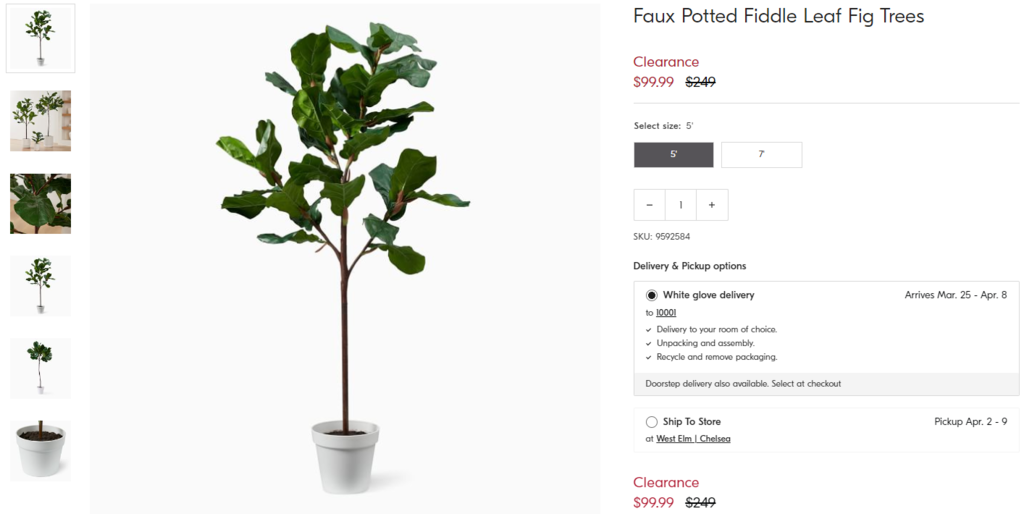
Artificial plants appeal to people who love the look of greenery but don’t want the maintenance. The most common DIY artificial plants are made from paper, wire, and felt, though unconventional materials like wool yarn and cloth can make your pieces stand out.
Realistic-looking artificial plants in attractive pots sell best, especially when they’re hard to tell apart from the real thing. They also work well as part of home decor bundles alongside items like candles or vases, which helps increase your average order.
21. Sharpie mugs
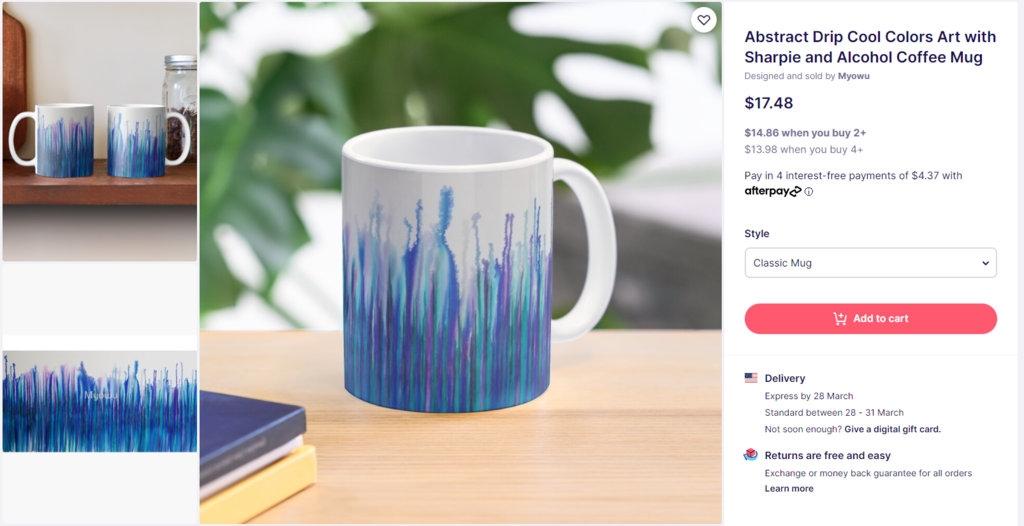
Sharpie-painted mugs might have the best effort-to-profit ratio on this entire list. A plain mug costs $1–$3, an oil-based Sharpie marker lasts for dozens of mugs, and finished custom mugs sell for $12–$20 each.
The secret to making this work as a real business (not just a hobby) is offering made-to-order designs with names, quotes, or custom illustrations, which turn a commodity item into a personalized gift.
They’re especially popular around the holidays, Valentine’s Day, and graduation season.
22. Coasters Coasters are one of those products where the material you choose defines your entire business. Resin coasters with embedded flowers sell to a completely different audience than minimalist wood coasters or hand-painted tile coasters. Pick your lane and own it.
Material costs range from $1–$5 per coaster, depending on what you’re working with, and sets of four typically sell for $20–$40.
They also work well as housewarming gifts, which means gift-ready packaging can justify a higher price point and set you apart from sellers who just ship the coasters in a plain box.
23. Cloth napkins Cloth napkins tap into two trends at once: the sustainability movement and the growing interest in elevated tablescaping. Eco-conscious buyers love them as a reusable alternative to paper napkins, while home decor enthusiasts want them for dinner parties and styled tables.
The real value comes from offering coordinated table setting collections (napkins, placemats, a table runner) rather than selling napkins in isolation. A set that would feel like a modest purchase on its own becomes a $50–$70 order when bundled.
24. Custom t-shirts T-shirts are among the most popular items in the online apparel market. A custom t-shirt business can work two ways: produce and ship them yourself, or let someone else handle it.
To start a custom t-shirt business, create attractive designs for a specific niche and find a supplier like Printful to produce them.
If you’d rather avoid dealing with inventory and shipping entirely, starting a dropshipping business through a print-on-demand service means you only pay for products as they’re ordered, with zero upfront cost.
25. Tote bags
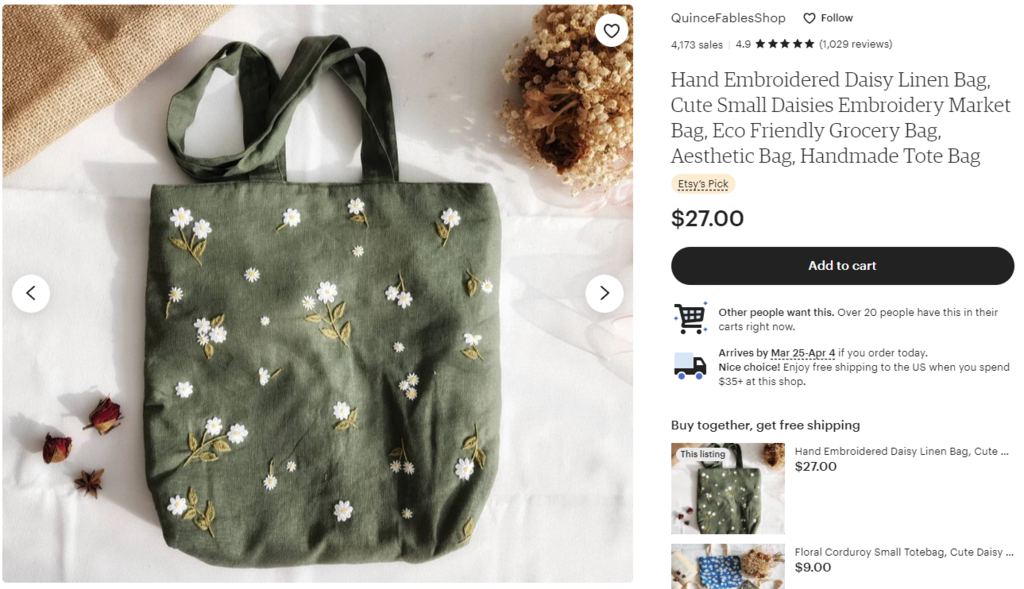
Tote bags benefit from a long-term tailwind: plastic bag bans and sustainability awareness keep pushing demand higher.
If you’re sewing them yourself, canvas fabric costs about $3–$5 per bag and finished totes sell for $15–$30. Print-on-demand is also an option if you’d rather focus on design.
Either way, designs with bold typography, empowering messages, or eye-catching patterns tend to perform best.
26. Socks Socks are popular homemade things to sell, and the two most common production methods are sewing and knitting.
Hand-knitted socks take longer to produce but command higher prices ($15–$30 per pair), while sewn socks from patterned fabric are quicker to make at a lower price point.
Novelty socks with quirky prints, holiday themes, or personalized text are especially popular, and releasing limited-edition seasonal designs is a great way to create urgency and keep buyers coming back.
27. Custom phone cases Custom phone cases are among the easiest things to start selling because print-on-demand platforms handle production and shipping for you. Your only job is creating designs people want to buy.
Tools like Canva make it easy to design cases even if you’re not a graphic designer. The typical profit margin through print-on-demand is $5–$10 per case after platform fees.
The one thing to stay on top of: new phone models are released every year, so your bestselling case designs will need updated compatibility regularly.
28. Upcycled and vintage fashion Sustainability is more than a buzzword, and upcycled fashion is one of the fastest-growing niches in the handmade space. The idea is simple:t stores) and repurpose it into something new
A torn maxi skirt becomes a tote bag. A faded vintage sweatshirt gets cropped and re-dyed. Old jeans turn into patchwork pouches.
Your material costs are minimal since you’re working with secondhand goods, and the finished products carry a sustainability story that resonates strongly with today’s buyers.
Upcycled pieces typically sell for $20–$50, depending on complexity, giving you solid margins on a very low investment.
29. Bookmarks Bookmarks are simple yet surprisingly profitable. You can make them from resin, pressed flowers, leather, fabric, or crochet, and finished bookmarks sell for $5–$15 each with minimal material costs.
What separates the top sellers from everyone else is niche focus: personalized bookmarks with birth flowers or initials, designs themed around specific book genres or fandoms, or bundles with other bookish accessories like reading journals and book sleeves.
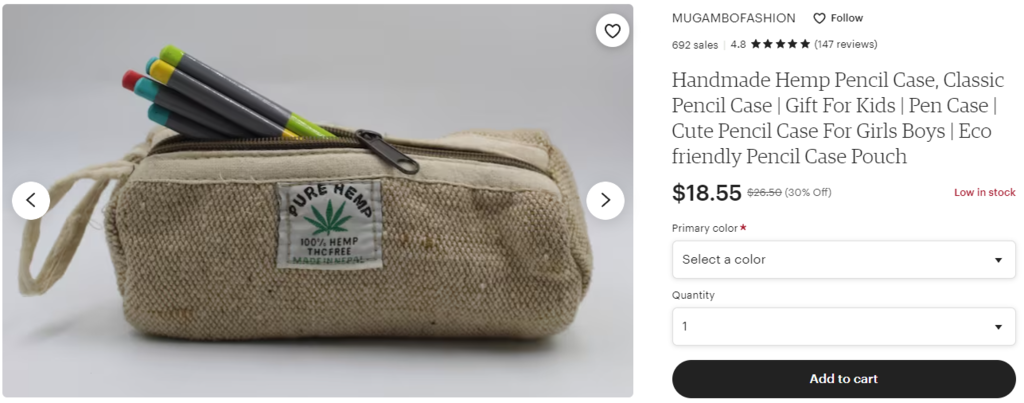
30. Stationery pouches
Stationery pouches are quick to sew, even for beginners, and your target audience of Mittens are a proven seasonal seller, especially during fall and winter. Hand-knitted mittens from quality yarn sell for $15–$30 per pair, while sewn fleece or wool mittens are quicker to produce at a slightly lower price point.
One approach that’s gained traction: making mittens from repurposed wool sweaters. You cansew them into mittens, and sell the finished product with a sustainability angle
Your material cost drops to almost nothing, and the margin becomes excellent.
36. Hats Hats are versatile accessories that you can create from scratch using crochet, knitting, or sewing, or buy plain and customize with embroidery, patches, or screen printing.
It’s a broad category with many different types, and the sellers who do best tend to pick one niche and own it rather than trying to cover everything.
Crocheted beanies, embroidered baseball caps, and wide-brim sun hats are all popular niches with different audiences and seasonal demand patterns.
37. Crochet wearables Crochet wearables are having a major moment, with custom-made bags, tops, hats, and cardigans trending heavily on social media.
People love choosing their own colors, yarn types, and designs, which makes made-to-order crochet pieces a great business model with minimal waste.
Yarn costs vary, but most wearable pieces cost $10–$25 in materials and sell for $40–$100+. The trade-off is time: a crocheted cardigan might take 10–15 hours to complete, so pricing your labor fairly is vital.
If you enjoy crochet and want to turn it into a proper business, starting a crochet business is easier than you might think once you nail down your pricing and production workflow.
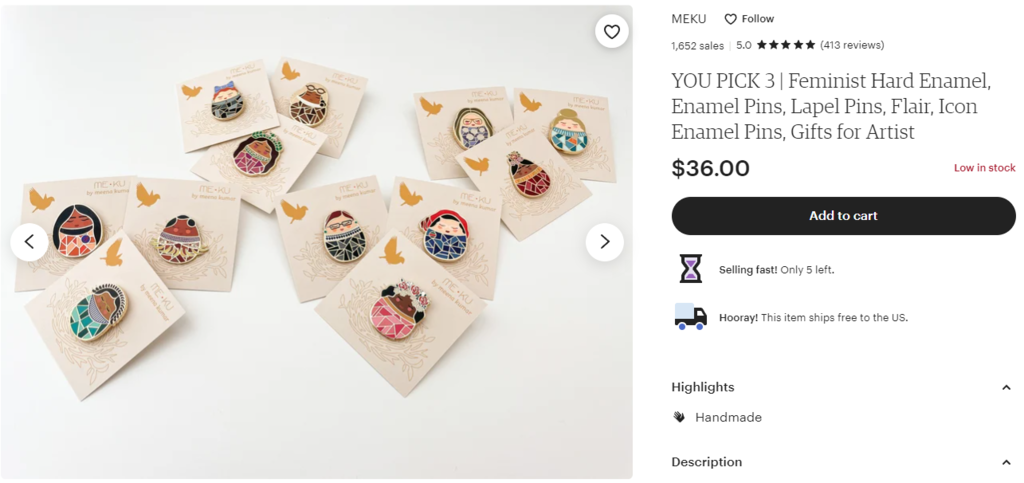
38. Enamel pins
Enamel pins work differently from most crafts on this list. Instead of making each one by hand, you design them and then partner with a manufacturer to produce them in bulk.
Making and selling enamel pins typically requires a minimum order of 50–100 pieces, with per-pin costs of $1–$2. The margins make that upfront investment worthwhile. Pins that cost $1.50 to produce routinely sell for $8–$12 each.
Niche designs with a strong theme (animals, fandoms, professions, humor) tend to build loyal followings, and limited-edition runs create urgency that drives faster sales.
39. Gift baskets Gift baskets are often sold as bundled or made-to-order items, which makes them flexible and fun to create. You can make the basket or box from wood, fabric, or recycled materials, then fill it with your own handmade products or curated items from other sellers.
The real value here is in the curation. A well-themed gift basket (new mom, coffee lover, self-care, housewarming) can sell for $40–$80+, even when the individual items inside would cost less if purchased separately.
Personalized gift baskets based on customer requests command even higher prices, and they’re especially popular around the holidays, Mother’s Day, and wedding season.
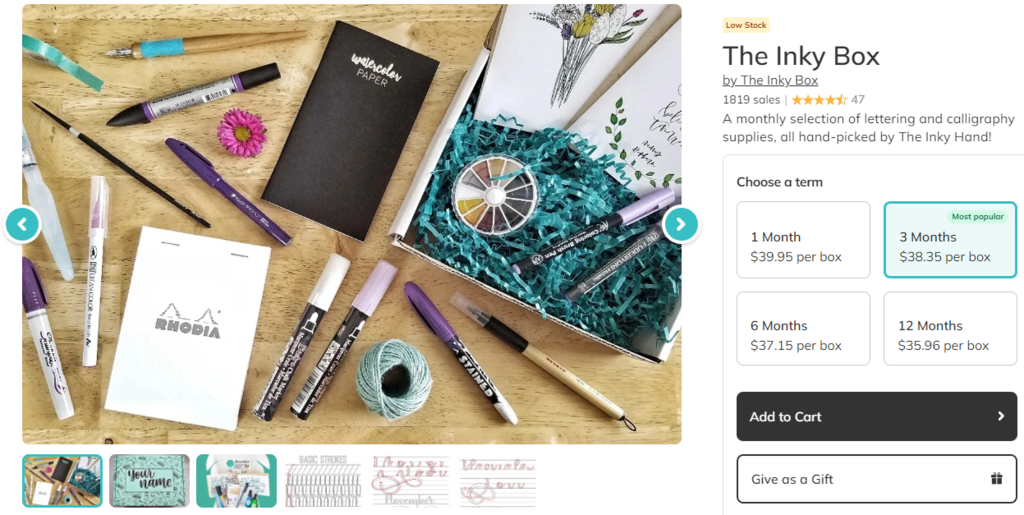
If you already make multiple products, a subscription box model turns one-time buyers into recurring revenue.
A subscription box contains a curated assortment of your products delivered monthly, and the recurring nature of the business makes your income more predictable than one-off sales.
For example, if you sell beauty products like soaps, lip balms, and perfumes, you could assort these into a themed monthly box priced at $25–$45.
Use a consistent box size each month to simplify logistics, and personalize the content based on customer preferences to reduce churn. The key metric to watch is retention: keeping subscribers happy for 6+ months is where the real profitability kicks in.
41. Music Music is one of the most popular digital products to sell online. If you write or produce music, digital distribution services like DistroKid make it easy to submit your songs to streaming platforms like Spotify, Apple Music, and others for a small annual fee.
You don’t need a full album to start. Singles and EPs are perfectly valid ways to begin earning royalties.
Beyond streaming, licensing your music for use in YouTube videos, podcasts, advertisements, and indie films can be a more lucrative revenue stream since a single license can pay $50–$500+, depending on usage.
42. Ebooks Writers should consider learning how to create an ebook to earn extra income. Topics can range from fiction to how-to guides, recipes, self-help, and niche non-fiction. Platforms like Payhip and Amazon make it straightforward to self-publish and start selling.
The profit margins on ebooks are excellent since there are no printing or shipping costs. A well-targeted ebook priced at $5–$15 can generate steady passive income, especially if you focus on a niche topic with consistent search demand.
Ebooks also work as a marketing tool that drives traffic to your other products, since readers who trust your expertise are more likely to buy from you again.
43. Online courses If you have in-demand knowledge or skills, selling online courses is all-structured course priced at $30–$200 can sell hundreds or thousands of times without any additional production work on your part
You can host your course on your own website or join established learning marketplaces like Udemy and Skillshare.
The key to success is choosing a topic you genuinely know well and structuring the content so it delivers clear, actionable results for your students. Courses that solve a specific problem (“How to set up an online store in a weekend”) tend to outperform broad, encyclopedic ones.
44. Web apps and software You don’t need to be a developer to build and sell software anymore. A no-code app builder likeHostinger AI Builder lets you create functional web apps, from simple calculators and directories to booking systems and CRM tools, without writing a single line of code.
WordPress plugins, browser extensions, and standalone SaaS tools also all have strong demand.
You can sell through your own website or list on marketplaces like Gumroad. Either way, the key is solving a specific problem well, since a focused tool that does one thing reliably will always outperform a bloated one that tries to do everything.