
The power of non-monetary investments
|
Published: 02 August 2022 – Updated: 09 December 2024
|
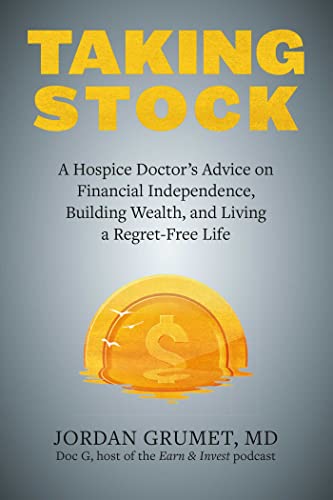
The following is from Taking Stock by Jordan Grumet with permission from Ulysses Press. Copyright
I used to have a patient who was an undertaker. We had many business. As I was often fond of saying: When the undertaker speaks, you should really listen.
Those of us who have made death and dying our business may seem unlikely investment advisers, but because both the undertaker and myself have spent extensive time in close proximity to mortality, we’ve been given unique insight into what’s really worth investing in. What investing tips could someone in my line of business have gleaned from dealing with death and dying? Believe it or not, a few quickly come to mind.
These tips weren’t learned by accompanying the wealthy through this difficult journey — although the wealthy have much to teach. These tips weren’t siphoned off of the personal books of those who had little interest left in hiding their secret ingredients to success. These are simple, straightforward bits of knowledge gained from walking down this lonely path with those reluctant to be making the journey.
And believe it or not, most of what I learned about investing has nothing to do with money.
Invest in Yourself
Personal investment comes in many forms. Chief among these is self-forgiveness.
Remorse is common in humans of all stripes — living and dying — and its effects can be devastating. The specifics may vary: an action taken or not taken, a relationship salvaged or destroyed, or an object bought or sold. The human capacity to blame oneself is unlimited. We spend endless amounts of time feeling bad about things we wish we had done better.
While self-blame serves the purpose of introspection and improving future outcomes, it often leaves a path of destruction it its wake. It’s hard to look forward when you are constantly looking back. The key appears to be changing what we can change and forgiving ourselves for the rest.
Losing his job was the least of Gerald’s regrets. Decades before being diagnosed with cirrhosis (chronic liver disease), his exit from corporate America set off a series of events that ended in alcoholism. His marriage fell apart, and he quickly became estranged from his ex-wife and his daughter, Sandy. While sobriety and eventual employment were recoverable, the damage he had done to his body was not. Neither was the estrangement with Sandy.
A large part of the life review process was spent with the social worker exploring his feelings surrounding the loss of his daughter. Gerald eventually was able to find a modicum of peace and forgive himself. He also realized that if this self-forgiveness had been granted earlier, he might have been able to quit alcohol long before his liver became so damaged.
- What have you been unwilling to forgive yourself for?
- What damage is this unwillingness inflicting?
Another common way we invest in ourselves is by slowing down. Often, we have big audacious goals and want to reach them immediately. Yet — as in the story of the turtle and the hare — slow incremental gain is what helps us win the race. If we can make progress toward a major goal by just one percent per month, we’ll have phenomenal annual returns over the long run. This principle applies to a skill, a relationship, or just about anything we strive toward. We mustn’t allow our
<p>We also need to invest in experiences. Experience compounds over time, just as our monetary assets do. As we learn and grow, we hone skills that make us better employees as well as people. Ask anyone who has risen through the ranks to become CEO of a company. Just like Taking Stock is a personal finance book, after all. So, don’t forget to invest in the stock market:
- Earn more than you spend.
- Save as much as you can each year (20 to 50 percent).
- Buy broad-based low-cost mutual funds.
- Max out retirement savings first, and then open a taxable brokerage account.
- Hire a financial adviser only to advise — not to invest for you.
My hope is that this book gives you the intellectual, tactical, and practical knowledge to get the money right so that you can invest more heavily in the other things I’ve discussed. I don’t want to minimize the importance of understanding the financial basics, but I do want to remind you that they are necessary but not sufficient.
Final Thoughts
These are my investing tips from a hospice doctor. As you can see, only the last section deals with money. The reason, of course, is that finances are the easy part. How you invest the rest of your time and energy is likely to determine your perspective in those waning days when you deal with a doctor like me. Don’t waste your life and regret.
Start investing now! Before it’s too late. The stronger the foundation you create, the better you’ll be able to deal with the unexpected. Because if you haven’t figured it out yet, that’s the point of investing in the first place.
Your investing plan has to start immediately — before you are dying and the end is so clearly in sight. Building a life of meaning, purpose, and connections takes time and compounding. Investing in yourself takes energy, and investing in education requires work. Building relationships with your children and community will be a mental and physical strain. Taking care of your mind and body will be taxing. Learning about personal finance and building financial security will consume hours that you might rather have spent on something else.
And it’s all so very, very worth it. Be as prepared for life as you would be for death.
Invest in yourself wisely.
Exercise: Non-Monetary Investment Inventory
Clear your schedule for an hour for two to three separate days over the next week. During that time, make sure all electronics are turned to silent, you’re well-rested and fed, and you have found a quiet, comfortable place to concentrate.
Take a sheet of paper, and separate it lengthwise into three separate columns. Number each from 1 to 10.
- For your first list, write down all the education you have received up to this time. You can start with high school, university, or college. Add in any graduate programs, online courses, on-site work trainings, or self-study projects. Be generous here — no need to have received a formal degree or certificate. It’s okay, especially for this section, if you don’t have ten full entries.
- For your second list, write down all your skills. These can range from professional expertise to innate talents to self-taught abilities. Don’t forget all that you’ve learned through social media. Are you a content creator? What about hobbies? Again, give yourself credit. What do people always tell you that you are good at?
- Finally, in the last column write down key relationships. This includes family, friends, work associates, and even acquaintances. List the ten people who have a big influence on your life. This is your community.
Now peruse your three lists together; this is the sum total of your non-monetary investments. What you have created is an inventory of your non-financial wealth. Often, we get so caught up in our net worth calculation that we forget about our non-monetary assets.
If you take your inventory of non-financial wealth and add it to your net worth calculation, you now have a true listing of all your ree pursuing your true purpose, identity, and connections? If so — welcome to financial independence!
Like this? Please share!
