

Content provided by British Council
[1] Across China, there is a new breed of platforms. They reportedly pay trainers between 4,000 yuan and 6,000 yuan a month (HK$4,707 to HK$7,061). These jobs attract unemployed workers and young people seeking flexible jobs.
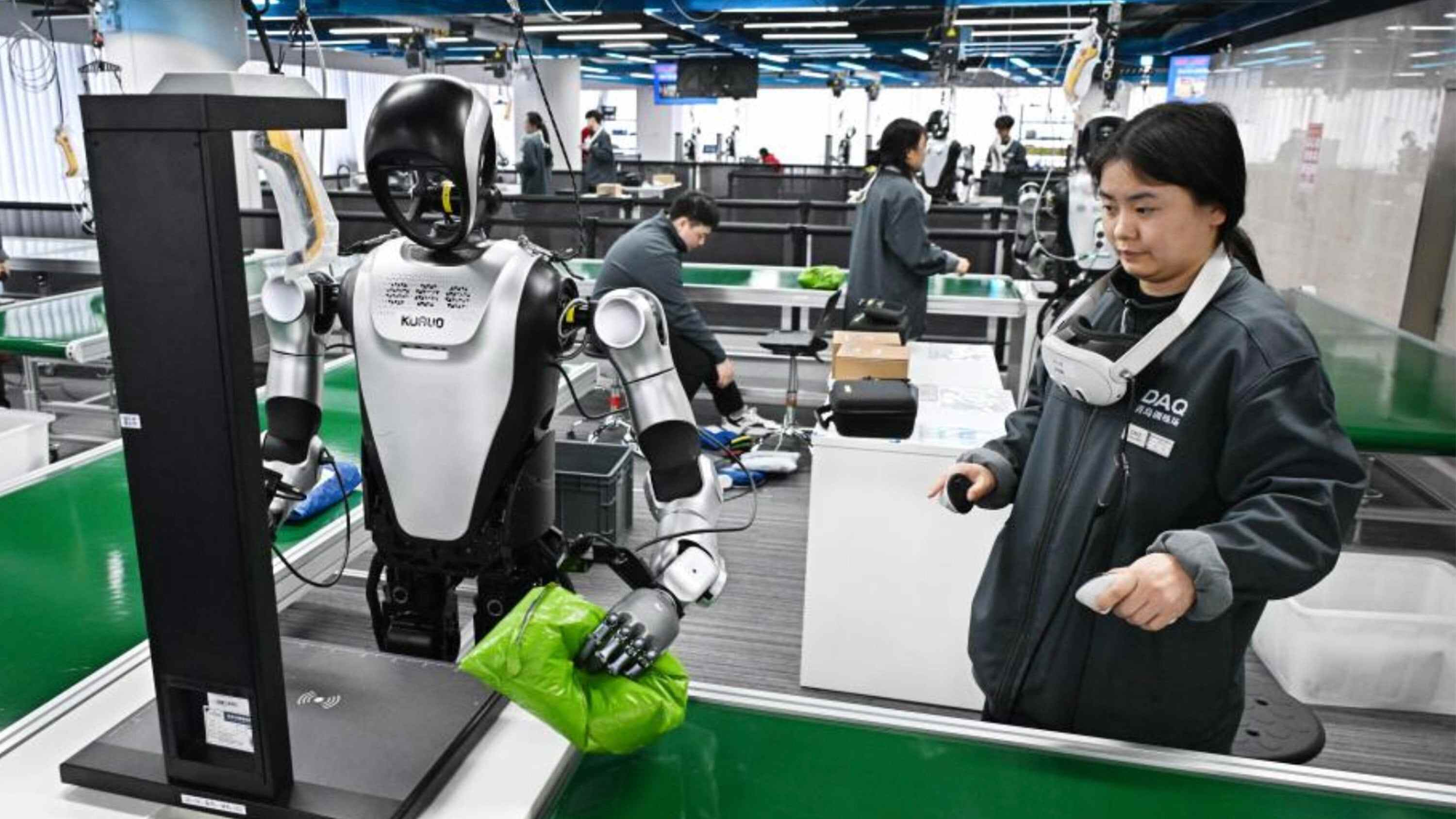
[3] Liu Yun, 40, started working in a new field after she lost her job in the car industry. At a Beijing studio, she wore a sensor bracelet and finger-mounted chips. She followed instructions on a computer screen. She repeated movements such as moving cups and scrubbing surfaces. “Rather than training robots, it feels more like teaching a two-year-old child,” Liu told Jizhou Studio. It is a mainland media outlet.
[4] Liu was being watched the whole time. Large screens ranked workers by productivity and accuracy. Each day, they had to finish 160 tasks. But the best workers did more than 260. For Liu, doing the same job over and over became tiring. Washing dishes and wiping tables 200 times a day was already too much for her.
[5] Sun, 22, is a student from Shanxi province in northern China. He took the job during his summer break. His assignments included folding clothes, sweeping floors and recording standardised movements for robot training. The work paid 120 yuan for a day shift and 135 yuan for a night shift. However, many workers left their jobs after only a few weeks. Sun found the income was not enough for the physical and mental strain of repetitive work.
[6] For others, the job offers flexibility. Guo Hongjuan is from Jiangsu province in eastern China. She works from home for about six hours a day. She collects data through tasks such as arranging books, wiping tables, and moving objects. She earns around 4,000 yuan a month. Guo says the arrangement allows her to work while caring for her child.
[7] The collection of human labour data is also moving beyond household tasks. In August, Shenzhen-based technology company Physen AI partnered with a sanitation company. They gave data-collection devices to street cleaners. As the workers swept roads and responded to disruptions, their movements were captured to help robots better understand real-world environments.
